Singapore’s ambition has long been its hallmark. From world-class infrastructure to global competitiveness, the nation has consistently aimed to be a step ahead.
Yet, beneath this drive lies a hidden barrier to sustained productivity: poor psychological safety in the workplace. A recent study by Calm Collective Asia and Milieu Insight revealed that more than 60% of employees in Singapore do not feel safe raising mental health challenges with their managers. This is the highest in Southeast Asia and points to a deeper leadership crisis that directly impacts engagement, retention, and innovation.
Why Traditional Leadership Models Are Failing
The old model of command-and-control leadership, where authority is centralised and performance is measured by compliance, is struggling to keep pace with modern workplace realities. These approaches may have worked in the past, but today they often lead to mistrust, disengagement, and burnout. The challenges are magnified in hybrid and remote work environments. Leaders who rely on “visibility” as a measure of productivity risk alienating employees, particularly Gen Z, who value autonomy, transparency, and purpose. Without adapting, organisations risk losing the very talent they need to stay competitive.
Closing the Gap: The Leadership Route
For HR leaders, the message is clear: unlocking productivity requires more than ambitious goals, but a rethinking of how we lead. Evidence consistently shows that when employees feel safe to contribute ideas, admit mistakes, and take risks, teams become more innovative and resilient. Yet in Singapore, many workers still hold back, fearing judgment or repercussions, or silently suffering from burnout. This gap between leadership intent and employee experience has become one of the most pressing barriers to progress.
This is the very gap we are working to close at Mango Training, with the development of the Leadership Route. The Leadership Route refers, not to a fixed set of actions, but to an interconnected web of beliefs, behaviours, and competencies supporting a culture where others can thrive. Instead of ordering from the top, they lift from within. From reducing managerial churn to unlocking cross-functional capacity, it positions leadership transformation not as a matter of soft skills but as a strategic necessity for the future of work.
From Command to Connection
Collaborative leaders are no longer heroes solving every problem but stewards of environments where people are empowered to do their best work. At the core of this framework lies a critical question: What do you believe about people? Are they only productive when closely monitored, or do they flourish when trusted? The answer shapes everything; from how leaders delegate and resolve conflict to how they inspire and communicate vision.
As showcased in the Leadership Route, the most profound outcomes happen when leaders recognise that leadership is not about control, but about connection. Understanding the origins of one’s leadership beliefs facilitates growth, either by reinforcing helpful patterns or unlearning those that no longer serve. A strong example is Mango Training’s women’s leadership programme, built on Leadership Route principles, which led to improved collaboration across functions and a visible shift from mistrust to trust. These outcomes highlight that psychological safety is not an abstract or soft concept. It is a measurable driver of performance and a real source of competitive advantage.
Leadership for Hybrid Work and Gen Z
Effective leadership today is less about control and more about enabling. Leaders must create conditions where employees can thrive, regardless of location, seniority, or generation. For hybrid teams, this means building trust beyond physical presence. Instead of equating productivity with long hours or constant availability, leaders need to focus on outcomes, clarity of expectations, and psychological safety. For Gen Z, who now make up a growing share of the workforce, leadership must also reflect values of authenticity, inclusivity, and shared ownership. The business case for this shift is undeniable, with studies revealing that at least 67% of workers across organisations felt motivated to go the extra mile when empowered by their leaders. In such spaces, feedback flows freely, innovation accelerates, and people are more likely to contribute their best ideas without fear of reprisal.
Small Shifts, Big Impact
Change often begins within teams. Small and consistent actions such as listening with intent, building trust, and stepping back so others can step forward often prove most transformative. Leading by lifting is not about being softer, but about being wiser. It requires self-awareness, humility, and the willingness to grow alongside those you lead. Research shows that teams with strong psychological safety are three times more likely to admit errors and twice as likely to experiment and problem-solve effectively. McKinsey data also highlights that companies prioritising empowerment and shared ownership see up to 40% improvements in engagement and lower in absenteeism.
Encouragingly, even industries known for rigidity, such as manufacturing, have adopted collaborative leadership with measurable success. Organisations that embed psychological safety report stronger team dynamics, higher engagement, and productivity gains.
The Future of Leadership in Singapore
As the future of work continues to unfold, Singapore’s greatest strength will not come from infrastructure or ambition alone. It will come from workplaces where employees feel safe, valued, and empowered to contribute their best. The leaders who will define this future are those who create trust and resilience, enabling their people not just to perform, but to thrive together.
 About the author
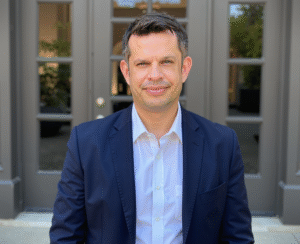
Alex Cummins, a leading business trainer in Asia, delivers a practical and eye-opening guide to leadership that takes a close look at both “traditional” and “evolved” styles of leadership, including what sets them apart and the benefits that flow from adopting an evolved approach to leading others.