Singapore’s corporate sector is currently navigating a shift in workplace dynamics that carries implications for long-term gender parity goals. While women held 25.5% of board seats in top SGX-listed firms as of mid-2025, the trajectory toward the national target of 30% by 2030 is meeting a formidable structural resistance.
An emerging “ambition gap”, where 80% of women express interest in promotion compared to 86% of men, is not a sign of waning drive; it is a symptom of circumstantial friction. This gap only stabilises when structural support and senior advocacy are consistent across all work models.
The environment is further influenced by a climate of “job hugging”, characterised by a record-low resignation rate of 1.2% in Singapore. In this economic landscape, a return to the office often feels mandatory rather than intentional.
This has birthed a dangerous “flexibility stigma” where nearly half of the local workforce feels their professional dedication is questioned the moment they step away from a central desk. When physical presence becomes the primary metric for value, firms aren’t just measuring work; they are inadvertently penalising the very demographics that require schedule autonomy to succeed.
The tension in Singapore reflects a divergence between formal corporate policy and internal culture. While many organisations offer flexible arrangements on paper, the career impact remains disproportionate. Women utilising flexible work are nearly 1.5 times less likely to be promoted than their on-site counterparts. Interestingly, this “proximity penalty” does not affect men in the same way, creating a structural friction where “office presence” has become a gendered tax on career progression.
This disparity is a result of a system that fails to account for the “triple shift” of professional, domestic, and caregiving responsibilities. Rigid attendance requirements inadvertently remove the autonomy needed to balance these complex roles. By forcing talent to choose between an outdated culture of “presenteeism” and peak output, firms risk losing their future leaders before they ever reach the boardroom.
To bridge this gap, the conversation must move beyond the binary “remote vs. office” debate and embrace a model of workspace agency. Measuring productivity by “square footage” is an outdated metric; the modern office must instead be valued for the “social capital” it generates.
As Singaporean workers now expect lifestyle and wellness amenities as a baseline for the commute, the office is evolving from a place of obligation into a “destination of choice”. For high-intensity collaboration to reap results, the office must be viewed as “cultural infrastructure” where decisions are tied to talent strategy rather than just real estate costs.
The traditional model of a centralised headquarters should be supplemented by a “hub-and-spoke” system. By utilising professional, localised hubs, firms can provide high-standard environments closer to residential areas, allowing for peak output without the cost of long commutes. This model is a critical tool in reducing the burnout that currently impacts retention, ensuring that having a family and reaching the boardroom are no longer mutually exclusive goals.
The mismatch in Singapore’s workforce remains stark.
64% of employees desire flexibility, yet only 41% feel empowered to use it. Closing this gap requires validating work performed outside the central headquarters as being of equal professional status. When a leader hosts a high-stakes meeting from a professional hub, she isn’t asking for a “favour”; she is utilising a high-performance tool.
Singapore’s modest 5% growth in flexible workspace demand is a strategic move by forward-thinking enterprises to bypass the “flexibility stigma”. For Singapore to meet its 2030 board targets, the focus must shift toward “purposeful presence”. By leveraging human-centric workspaces, organisations can ensure that the path to leadership is defined by measurable results and consistent advocacy, rather than physical proximity.
 About the author
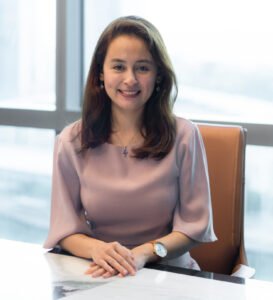
Maria Nakamura
Head of Business & Hospitality, Arcc Spaces
Maria is the Head of Business & Hospitality at Arcc Spaces, where she leads the hospitality-led business strategy across the company’s premium flexible workspaces. With a unique blend of expertise in luxury hospitality and business operations, Maria specialises in aligning service design with operational objectives, delivering tailored experiences that reinforce the Arcc Spaces brand and enhance long-term business outcomes.