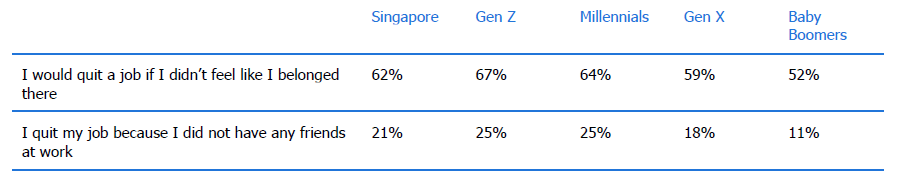
Three in five respondents (62%) in Singapore would quit their jobs if they didn’t experience a sense of belonging at work, with Gen Z workers (67%) being the most likely to consider resigning.
Randstad – the world’s largest talent agency – today released its 2025 Workmonitor research in Singapore. The study surveyed 750 talent locally and identified that a positive workplace community is the foundation of employee engagement for higher productivity, happier employees, and cost savings for companies.
The survey found that 21% of respondents have quit a job because they did not have any friends at work. This is especially true for both Gen Z and Millennial workers, as 25% reported leaving their jobs due to the lack of community.
David Blasco, Country Director at Randstad Singapore said, “Job satisfaction has evolved far more than checking off to-do lists and taking home a salary. For younger generations, the total employee experience is a rich tapestry of meaningful relationships, work-life harmony, lifelong skilling, and progression opportunities. It’s also about feeling a deep connection to the organisation, where employees are not just contributors but integral members of a community that values them.”
Workplace friendships drive happiness and productivity
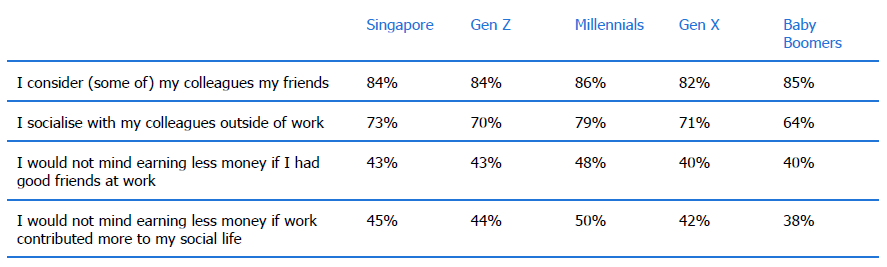
The survey shows that talent in Singapore enjoys the social aspects of work. 84% of respondents consider some of their colleagues as friends, with 73% reporting that they continue to socialise with colleagues outside of work.
“People go to work not just for the job itself, but because they look forward to creating memories with their colleagues, many of whom become close friends. When surrounded by positive energy, employees are naturally more motivated to excel. Employers also benefit from supporting the growth of these communities, as they will have better talent retention and can attract talent more easily rather than enter expensive price wars to recruit,” shared Blasco.
Almost all of the respondents said that they are able to perform better at work if they feel a sense of community and feel that they know their colleagues.
Interestingly, 43% of workers say they wouldn’t mind earning less money if they had good friends at work. 45% would also accept a lower salary if their work contributed to their social lives, showcasing the tangible value employees place on workplace connections.
Trust gap puts talent attraction & retention at risk
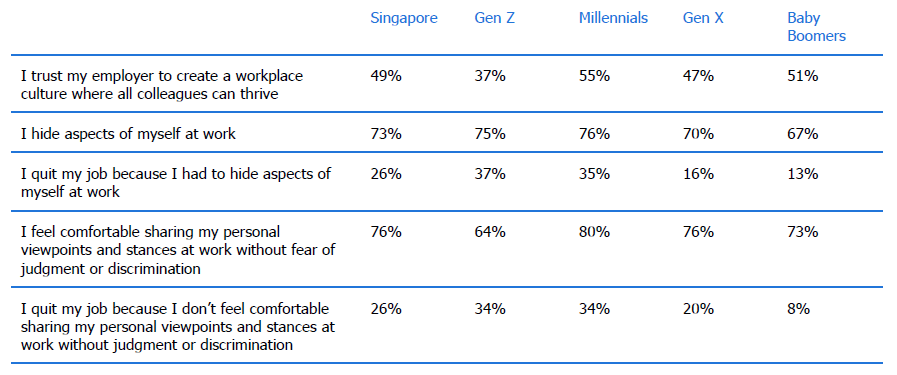
Even though a strong workplace community is highly valued, 49% of respondents feel that they can trust their employers to create a culture where everyone can thrive. There is a clear generational divide, as only 37% of Gen Z workers agree with the statement.
“Trust is a delicate force that takes time to build. Leaders play a pivotal role by being consistent in keeping to their commitments to care for their employees’ health and growth. For employees to thrive, they need to feel confident and supported when sharing their ideas and receiving support to help bring their ideas to life.”
“A culture of trust is a powerful magnet for attracting and retaining top talent, as it signals that the organisation believes in their people. By empowering employees to trust in themselves and their leadership, organisations create environments where differences are valued, successes are celebrated, and failures are accepted,” Blasco concluded.
1 in 4 respondents still hide aspects of themselves at work, particularly the younger generations
Genuine relationships in the workplace thrive when there is transparency, as well as mutual trust and understanding. However, respondents in the survey feel compelled to conceal aspects of themselves at work.
One in four respondents quit their jobs as they had to hide aspects of themselves at work. This is particularly true for Gen Z (37%) and Millennials (35%) compared to Gen X (16%) and Baby Boomers (13%).
Commenting on the survey results, Blasco said, “As younger generations navigate the working world, they may feel pressured to conform to traditional norms, fearing that expressing their honest opinions and true selves might hinder career growth. It is important for employers to understand that younger generations value inclusivity and authenticity, and companies should create spaces where diverse perspectives are welcomed to retain top talent and attract the next generation of leaders.”
The survey also further revealed that 26% of respondents have quit their jobs because they did not feel comfortable sharing personal views at work without being judged or discriminated against. Gen Z and Millennials (34%) have done so, in contrast to Gen X (20%) and Baby Boomers (8%).
 About the author
David Blasco is the Country Director at Randstad Singapore. With more than 11 years of recruitment experience, David specialises in senior-level hiring and executive search. At Randstad, Blasco leads a team of 30 recruiters across accounting & finance, sales & marketing, human resources, business support, and legal. His keen knowledge of the latest market intelligence and talent trends makes him an invaluable recruitment advisor to his clients, from start-ups to multinationals, on their talent needs.